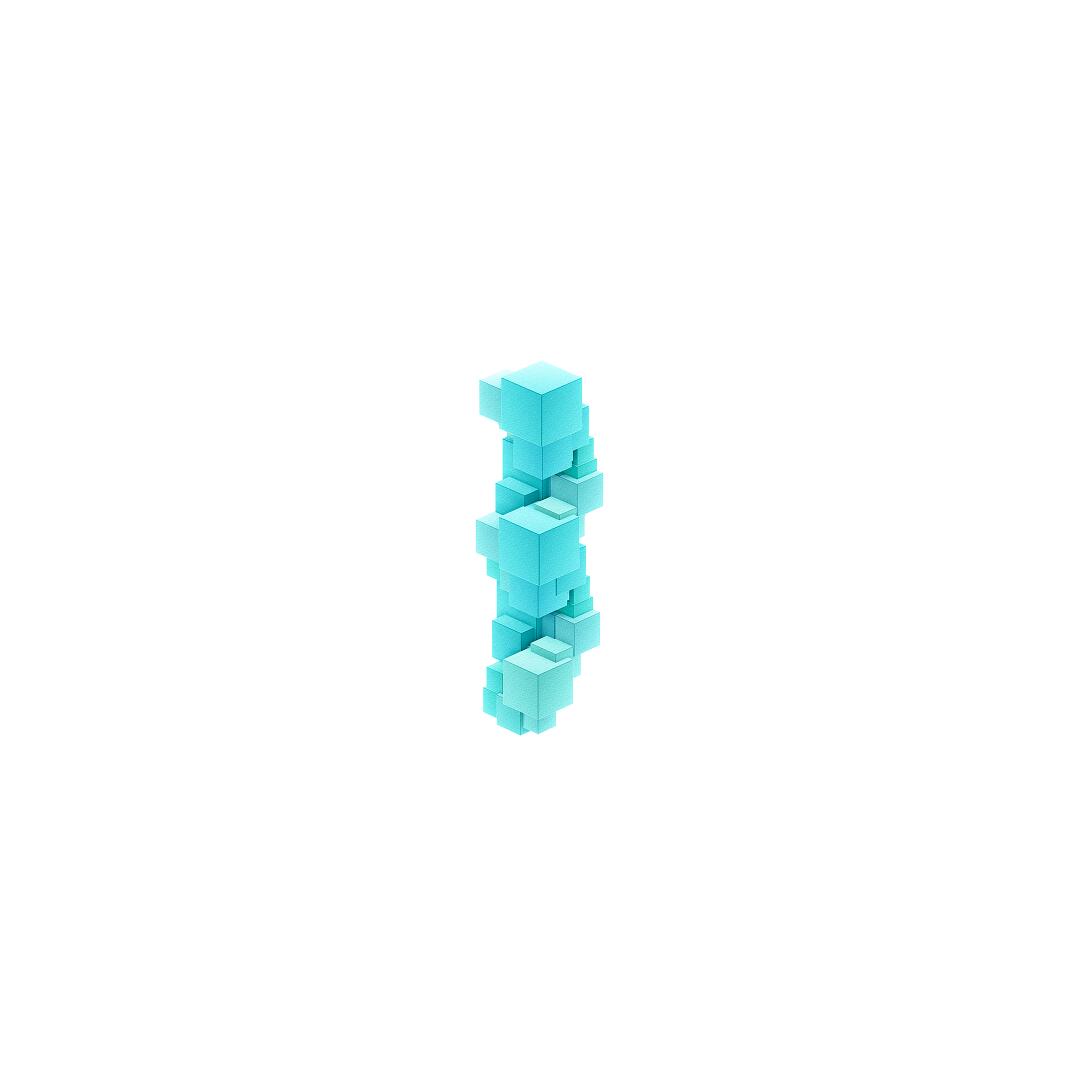
Virtues of the Awkwardly Constructed by Mark Constantine Inducil
Virtues of the Awkwardly Constructed
Bio
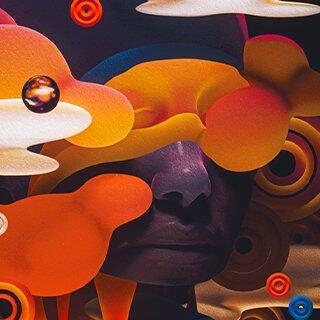
Mark Constantine Inducil was born in 1979 in Quezon City, Philippines, and currently resides in Melbourne, Australia. His expertise lies in digital art, where he crafts intricate pieces using 3D modelling software to create vibrant, detailed portraits marked by vivid colours and fragmented forms. Inducil’s work has become known for its textured richness and emotional depth, reflecting his exploration of memory, psychology, and emotional processing. His journey as an artist is deeply personal, drawing from his own experiences and struggles to understand the complexities of human psychology.
About the Work
I primarily work with digital software like Cinema 4d, Octane Renderer, After Effects, and Photoshop. My creative process involves a lot of experimentation and personal expression, resulting in intricate pieces marked by vibrant colours and organic shapes. I draw inspiration from personal memories, traumas and emotional experiences to determine the subject matter of my artwork. I'm influenced by surrealism, portraiture, and cinematography. I try to approach each piece as an experiment in style and narrative.
About This Piece
This project came about during a challenging period in my life, a time when I was dealing with a strong case of impostor syndrome. My personal work is directly influenced by my experiences, and at that time, I was navigating through significant uncertainty. I was determined to express this honestly. In Cinema 4D, I used CryptoCube 92 as a base for creating numerous abstract shapes and structures by using cloners and deformers. I experimented with these structures for days until familiar shapes were beginning to take form; a torso, a shoulder, a halo and so on. Sometimes, when things are unclear for me, I find it’s best to let the artwork reveal itself to you. It was then that I realised that I was creating a portrait. I used Cinema 4D to mould and assemble CryptoCubes 92 into an awkwardly constructed portrait. Then I animated its parts using GSG Signal and added visual effects, textures and colour grading in After Effects. Whenever I look at this piece, it reminds me of how I felt during that time - the uncertainty and the attempt to keep it together. It also reminds me of when I was younger, trying to fit in with the crowd, not yet knowing that it's okay to be different.
Future
NFTs and Web3 have revolutionised the way artists can share and monetize their work, offering opportunities for creative freedom and financial independence. These technologies have not only allowed me to pursue art full-time but have also connected me with a community of people who genuinely appreciate and support digital art. The decentralised nature of Web3 ensures that artists retain ownership and control over their work, which is empowering. It eliminates traditional barriers and gatekeepers, providing direct access to a diverse audience. This level of autonomy and connection was unimaginable before the advent of NFTs. Looking ahead, I believe the future holds even greater potential for innovation and collaboration. As the space evolves, I anticipate more sophisticated tools and platforms that will enable artists to push the boundaries of creativity further. Additionally, the integration of augmented reality (AR) and virtual reality (VR) with NFTs will likely create immersive experiences that redefine how art is experienced and valued.